
What We Count as Learning Limits California’s Potential
A breadth of life experiences prepared Steven Castro to succeed in his chosen field of work—but without conventional credentials on paper, he had to work even harder to build on genuine knowledge and skill. Steven’s journey underscores the importance of recognizing learner knowledge beyond what’s gained in the classroom—to realize human potential across more California communities. As part of a storytelling series presented in tandem with The Golden Ticket report, we’re centering the experiences of Californians whose success is critical to unlocking $4.4 trillion in economic opportunity for our state.
Historically, postsecondary education assumed a particular idea of who a student is and how learning happens for them. The dominant frame holds that learners move along a linear path from high school to college, learn primarily in classrooms during the workday, and earn a credential they use to secure a stable career. This doesn’t reflect the realities of many Californians. People move in and out of education as they change jobs, care for families, and participate in their communities. And they build skills and experience across these different contexts along the way. By the time a person enters a formal college setting or starts a new job, they may be bringing years of learning that happened somewhere else.
What we expect learning to look like and how it actually happens for many people raises an important question: What does California lose when we fail to recognize learning of all kinds, and who gets left behind when we narrowly define what counts as learning?
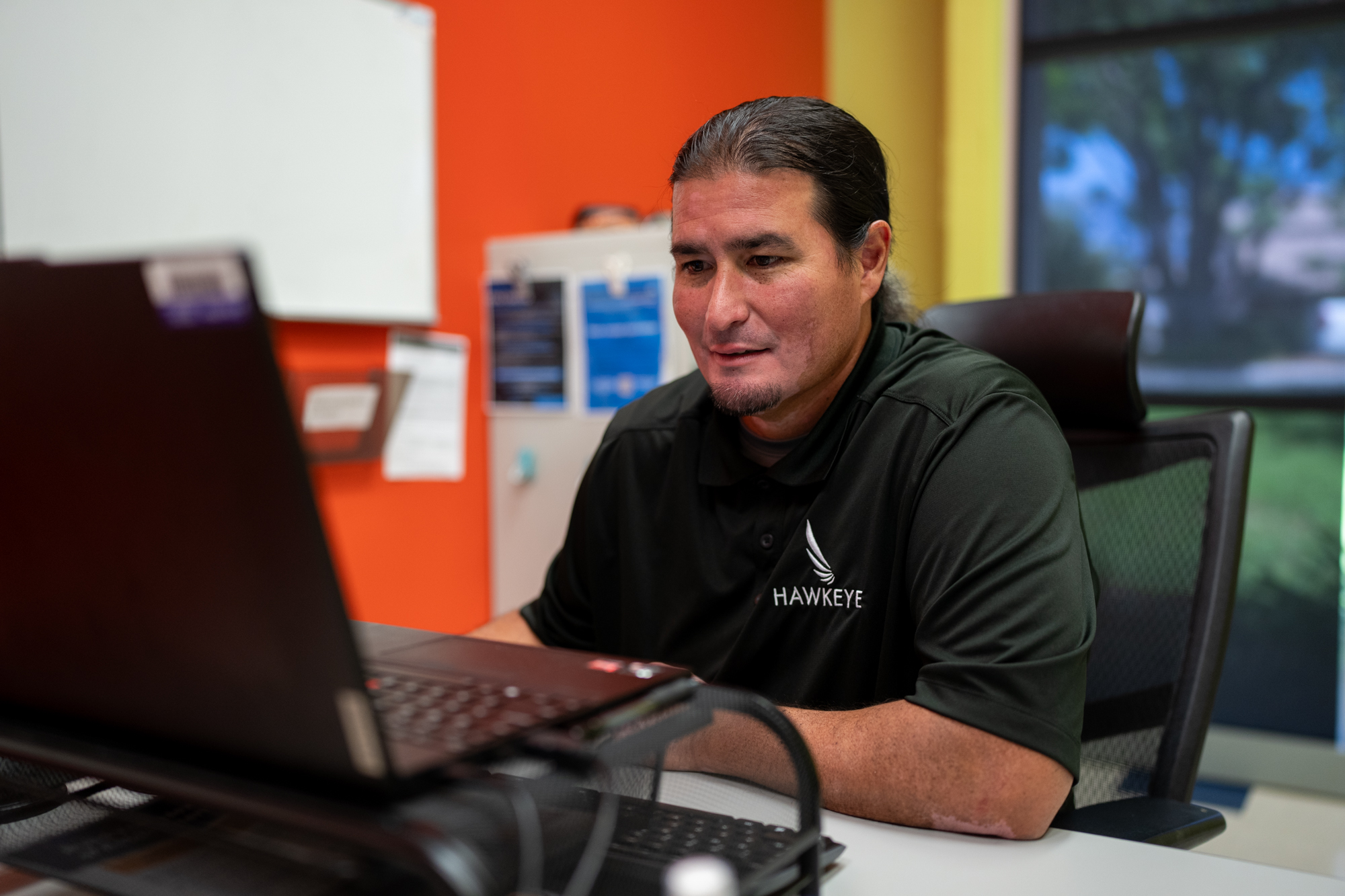
Steven Castro is 45 and lives in Redlands, California. He has been working since he was eight, when he first began helping his father and grandfather on construction sites. In the decades since, he’s held roles in hospitals and drug and alcohol facilities, workforce development settings, and the aerospace aluminum and glazing industries. Throughout this journey, Steven took classes, completed certificate programs, and kept learning—wherever he was. He sees himself as a lifelong learner.
It wasn’t until he reached his early 40s that Steven decided to enroll in a bachelor’s degree program in social work after a mentor asked whether he had ever considered the field. His mentor’s question moved him to act because Steven knew he had the experience, having spent his entire career building skills helping people navigate crises, connect to resources, and move forward despite significant barriers. What he did not have was formal recognition of this ability—or the “piece of paper,” as he calls it.

When Steven was 15, his dad died. After that, he remembers life becoming difficult for him. At 20, he was incarcerated and sentenced to life in prison. While in prison, Steven took the opportunity to learn, ensuring he would have skills upon release. In his first four years, he earned an associate of arts degree in general studies and a business certificate equivalent to an associate of science degree, later getting a diploma from Blackstone Paralegal Institute.

While Steven was completing classes, he also worked as a teacher’s aide and college clerk, supporting other men as they took the GED, enrolled in college, prepared for jobs, and created relapse-prevention plans. He and others created a book-lending program that benefited inmates across the prison’s racial boundaries and brought in the Toastmasters public speaking and leadership program, where Steven reached the highest level. “Little by little, we all started getting our degrees and graduating … running our own classes,” says Steven. “We were hardcore facilitating.”

Fifteen years into his sentence, a change in the law made Steven eligible for parole. A few weeks after he was granted parole, Steven was dropped off in a neighboring county, where his family met him with clothes. He had no money and no car, and his time in transitional housing was limited. He hoped to start work—any work—immediately. By this time, Steven had spent more than a decade developing skills that would become directly relevant to later roles he’d take on. He was advised, however, to leave those years off his résumé, erasing more than a decade of learning.

Throughout his career, Steven has encountered multiple setbacks when his learning and experience went unrecognized because of where and how he gained it. At a drug and alcohol treatment facility, Steven’s supervisor explicitly recognized that he was already capable of doing the same work. “You can do exactly what I do,” Steven recalls his supervisor saying. The issue, however, was that Steven did not have the specific credential his supervisor did.
Steven’s story gets at the heart of College Futures Foundation’s aspiration to see a reimagined postsecondary education ecosystem that meets learners where they are and recognizes the learning they’ve gained across their lives. His experiences reflect a common disconnect: People build knowledge and skills everywhere, but systems are still much better at recognizing what takes place in a formal classroom setting. Research conducted by a former College Futures Entrepreneur-in-Residence sheds light on what a system designed to recognize lifetime learning across different contexts might look like: “A learner-centered system would let learners demonstrate mastery when they are ready and have that growth recognized regardless of where it happened.”
Steven calls this idea “applied living credit,” a way to recognize what people learn through a breadth of work and life experiences.
He talks about what is lost when institutions recognize only certain forms of knowledge—and how the cost of narrow definitions of knowledge is borne not only by the people whose experience goes unrecognized. Recently, in his community service work, Steven asked a local education leader whether Indigenous people or local tribes would be involved in teaching a new Native American studies curriculum. The answer was that anyone credentialed could teach it and would not need to be Indigenous. For Steven, the example points to a larger problem. When institutions treat credentials as the primary proof of expertise, they also limit whose knowledge gets to shape systems, decisions, and ultimately, outcomes. For Steven, that exclusion can cause real harm to communities. This is part of what motivates him to bring his own Indigenous knowledge and lived experience into social work settings.

For 30 years, Steven has had to find unconventional ways to prove what he knows and can contribute, first at work and later in school. Endurance and adaptability, he says, have been keys to his success. But a better system would not require Steven to fight so hard to be seen. It would value knowledge gained through work, community, culture, and lived experience—and give institutions, employers, and communities access to a much wider range of expertise. The more fully California sees what its people already know and can do, the more of its potential we unlock.

What will it take to claim Our Golden Ticket?
Across California, millions of learners are building their lives while pursuing education—balancing work, family, and the path to something better. What would help: designing for real lives, connecting education to opportunity, and building the partnerships that make it possible. Read more stories, explore the research, and see what it will take to expand opportunity statewide.

Steven spent decades learning through work, education, community, and lived experience. But because much of that learning didn’t come with a conventional credential, he often had to prove what he already knew. Across California, people are building knowledge and skills in countless ways. When we broaden what counts as learning, we broaden who gets to contribute—and unlock more of California’s $4.4 trillion economic opportunity. Take the Golden Ticket Pledge.