Announcements & Commentary


Design for Working Adults, Design for Flexibility – Part Two
By Rebecca Ruan-O’Shaughnessy, Director of Program & Strategy at College Futures Foundation

In Design for Working Adults, Design for Flexibility – Part One, we introduced Andrea, a 43 year-old learner who stopped out of college to work full-time and care for her family. She always wanted to return to finish her degree but found that the rigid structure of traditional higher education prevented her from doing so.
Andrea was not asking college to be easier. She was asking whether it could offer a real opportunity for economic mobility that was actually possible in the life she was already living. For working adult learners like Andrea, time, cost, work, caregiving, and uncertainty are not preferences to be balanced later. They are hard filters that determine whether an option is truly available at all. That is why delivering value requires intentional design: learning organized around skills, credentials that connect to opportunity, and enough flexibility to keep both within reach. Competency-based education (CBE) is among the most powerful tools institutions have for that redesign because it helps institutions break from habit and, instead, focus on what matters most: what learners know, what they can do, and where that learning can take them.
For many institutions, CBE can feel like a heavy lift. It requires fundamental internal redesign across curriculum, assessment, student support, operations, technology, and culture, while navigating external rules, incentive structures, and approval processes still built for a different era of higher education. That complexity is real. But SOVA’s recent report on direct assessment CBE (DA-CBE), one form of CBE, makes clear why it matters. DA-CBE is “more than a new instructional approach.” It points toward what the report calls a new adult learner contract: not a single reform, but an interconnected architecture for modern higher education.
That is the promise of CBE. It does not simply make existing programs more flexible. It makes learning more accessible without making it less rigorous. It asks institutions to redesign learning around a different premise: that learners are not blank slates, that the skills they bring from work and life should count, and that learning should connect more directly to hiring, advancement, and economic mobility.
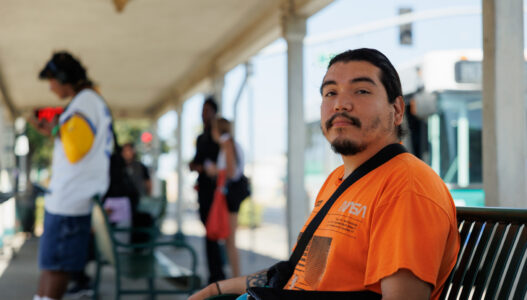
“Nunca me imaginé tomando una clase de estas, porque toda mi vida he trabajado en una lechería y es lo único que sé hacer, y ahora ya puedo usar mi teléfono y hasta mandar estos correos electrónicos.”
“I never imagined taking a class like this because I’ve worked at a dairy farm my whole life and it’s the only thing I know how to do, and now I can use my phone and even send these emails.”
– Angel Mendoza, 68-year-old student, Merced College
Different Models, Shared Commitment
Another part of CBE’s promise is that there is no single model. Institutions do not have to begin with the most complex version to start moving in this direction. Colleges can start now, within existing structures, by designing around competencies, flexibility, and demonstrated skills. The models will differ, but the starting point is the same: begin with what learners know, then redesign learning around what their lives require and where they are trying to go.
Coastline College and Merced College show what CBE can look like inside California’s existing public higher education systems.
Coastline College is a trailblazer for the California Community Colleges system. Its Pace+ program is the first federally approved DA-CBE degree program in the system, with a fully online Associate of Science in Management as its first offering. By showing DA-CBE can be built into the degree itself, not just around it, Coastline helps move CBE beyond a specialized offering and toward a design approach that other programs and colleges can build from. In doing so, Coastline is not only serving its own learners; it is making the road easier for those that follow.
Merced College’s starting point is place: the Central Valley, its learners, and its workforce. Its agriculture-focused CBE model connects flexible learning to regional economic need by recognizing skills learners already bring from work, building confidence from what they already know, and helping them move toward new possibilities, without asking them to step away from their jobs, families, and communities. By designing around learners’ lives, Merced shows how CBE can reach learners in a way that the traditional design of higher education too often misses.
Their approaches differ, but together they make the same point: CBE is not about fitting learners into old structures. It is about redesigning education around what learners already know, what their lives require, and where opportunity exists. And when the design changes, so does who gets served and the learning experience they have.

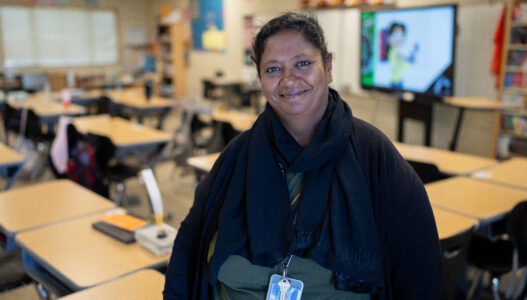
“Before joining the [Pace+] program, I struggled to stay on track in college and had failed out several times. Pace+ gave me the structure, flexibility, and support I needed to succeed while balancing a full-time federal job and other responsibilities. The competency-based format allowed me to learn at my own pace, and the faculty and staff were always responsive and encouraging. One of the biggest differences for me was having an Engagement Coach who regularly checked in with me and kept me motivated. That level of personal support made me feel like someone genuinely cared about my success.”
– Atraiu Williams Masters, Coastline College student
The Point Is to Start
Coastline College and Merced College show two ways forward, not the limitations of CBE. Competency-based education will not look the same everywhere. That is not a weakness. It is the work. Institutions do not need a perfect model before they begin. But they do need to begin.
For learners like Andrea, waiting has a cost: more time, more risk, more uncertainty, and too many options that disappear before they ever become real choices. Institutions do not need to move in the same way, but they do need to move. The models will differ. The responsibility to meet learners where they are will not.
“It has lifted my self-esteem, and I feel so much more confident. Challenging myself here, I know there isn’t anything that I can’t explore or be proactive with.”
– Jessica Howeth, Ag Systems Certificate Completer, Merced College